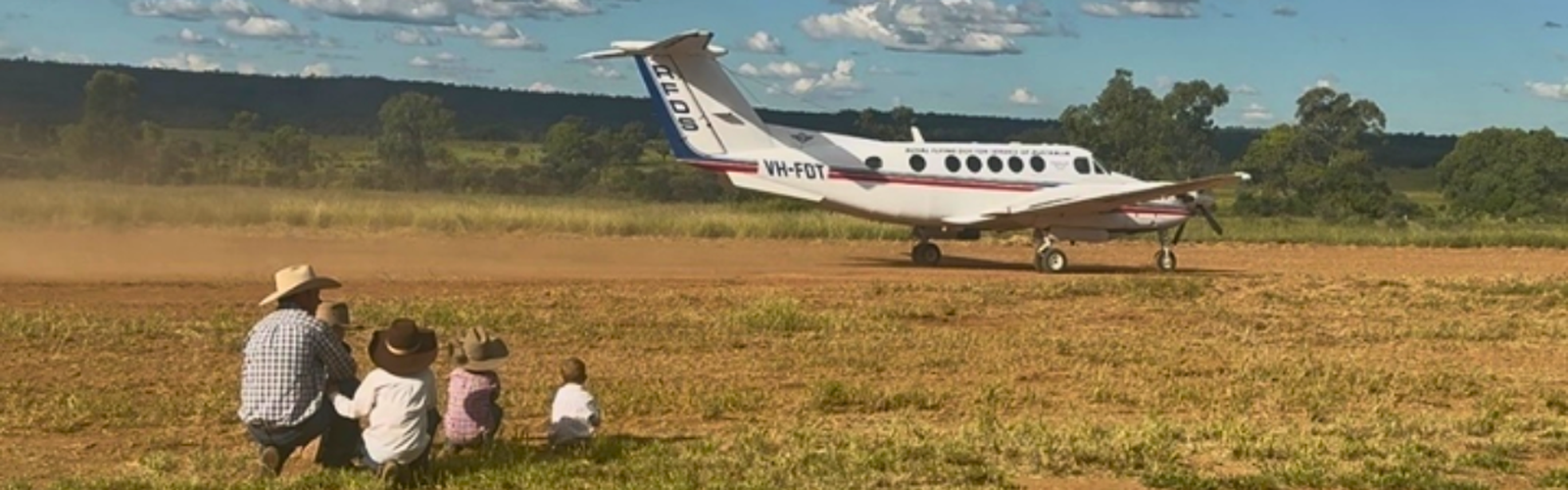
On 17 May, Flying Doctor Day, we celebrate the anniversary of the Royal Flying Doctor Service (RFDS) and honour the people who keep its legacy flying.
Each year on Flying Doctor Day, RFDS supporter, Dick Wharton celebrates the Service and the lifelong mantle of safety it gave him growing up in the outback.
Dick was born in Townsville and raised on a sheep and cattle station east of Cloncurry, the birthplace of the Flying Doctor.
Like many bush kids, his childhood was shaped by wide, open paddocks, riding horses and milking cows.
Schooling was done at home. The nearest shop was almost a 100km drive away. And before School of the Air, communications with the outside world came through the RFDS radio.
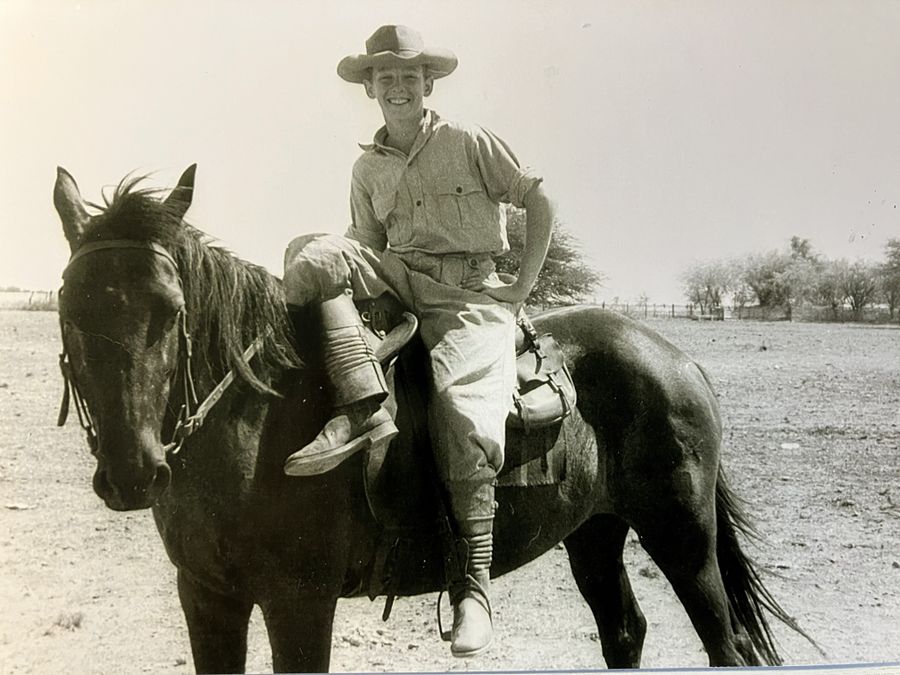
For his family, the RFDS wasn’t just there for emergencies—it was a part of everyday life as they relied on the RFDS Medical Chest and telehealth for help.
“As a kid, if something went wrong, Mum or Dad would ring the Flying Doctor, and they’d tell us exactly what to do,” Dick said.
“One day, I trod on a broken bottle and cut my foot quite badly, so Mum called the RFDS and was able to treat it using contents from the chest.
“John Flynn’s words, ‘a mantle of safety’, were exactly right.
“With the RFDS, you always felt you had someone who could step in and help if there was a serious medical emergency.”
As Dick grew older, he moved to the big smoke to attend boarding school in Brisbane and graduate from university as a civil engineer.
Little did he know his life would turn full circle when he discovered his first gig as an engineering cadet would be back in his hometown, Cloncurry, as part of the Beef Roads Scheme.
“It was an Australian-wide initiative in the 60s to build a bitumen road network out west,” he said.
“A lot was happening in north-west and central-west Queensland so that road trains could transport cattle quickly instead of having to drove them.”
Dick eventually became the District Engineer for Cloncurry and was responsible for Main Roads spanning from Torrens Creek in the east to the Northern Territory border, and from Dajarra up to the Gulf of Carpentaria.
When his family relocated, they were housed in one of the original Flying Doctor houses on Gregory Street—once home to RFDS doctors before the Cloncurry Base moved to Mount Isa in 1964.
During this time, he grew a strong appreciation for the resilience of Queenslanders, who were often cut off from civilisation during a storm, and saw the need to connect communities to services out west.
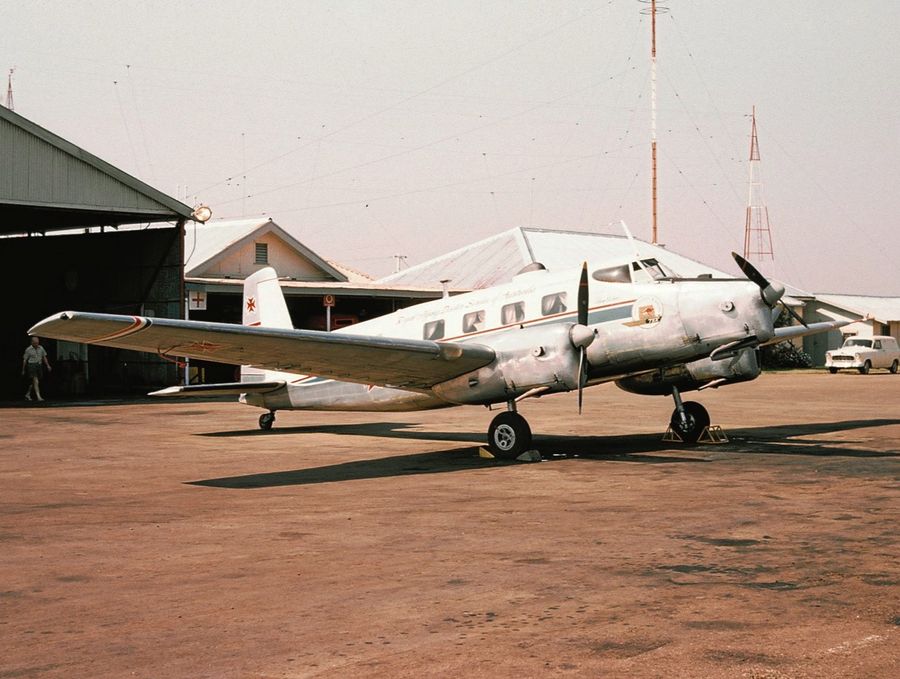
His team worked hard, enduring isolation, heat, dust and torrential rain, but even on the road, the RFDS was never too far, with most contractors bringing an RFDS Medical Chest along and checking there was an airstrip nearby.
“You just never know what’s going to happen living and working in the bush,” Dick said.
“You could get tossed off a motorbike, bitten by a snake, kicked by a horse or even worse.
“And there's not an emergency department around the corner—the RFDS is your only option.”
Now, after a lifetime of support from the Flying Doctor, Dick has chosen to give back by leaving a gift in his Will to the RFDS to keep its legacy flying.
“As a bush kid, the RFDS was always there for me, and I’d like it to be there for other people in the future,” he said.
“So, if I can leave a bequest for them, it might help to put a bit of gear in the plane or help fuel aircraft one of these days.
“It's just a way of saying thank you for having my back for all of these years.”
The RFDS was made possible by the same act of generosity—a gift in a Will from Hugh McKay, which helped lease the Service’s first aircraft.
Nearly 100 years on, that same spirit of giving continues to keep the RFDS in the air, helping deliver life-saving healthcare to regional, rural and remote communities across Australia.