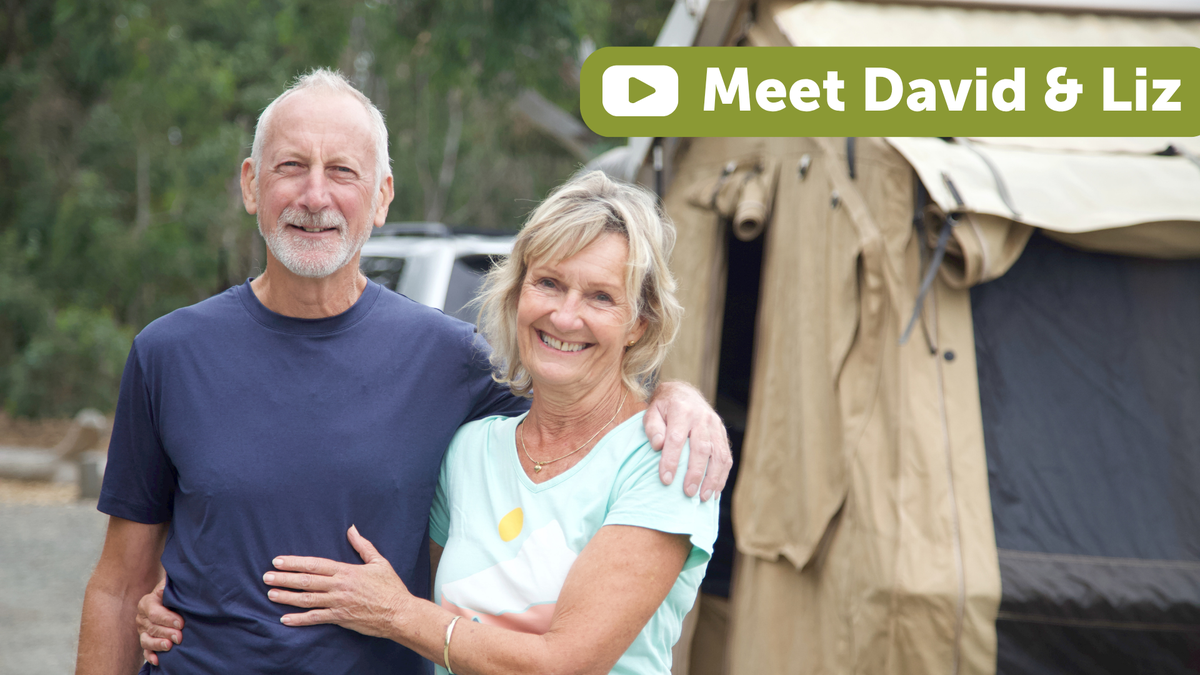
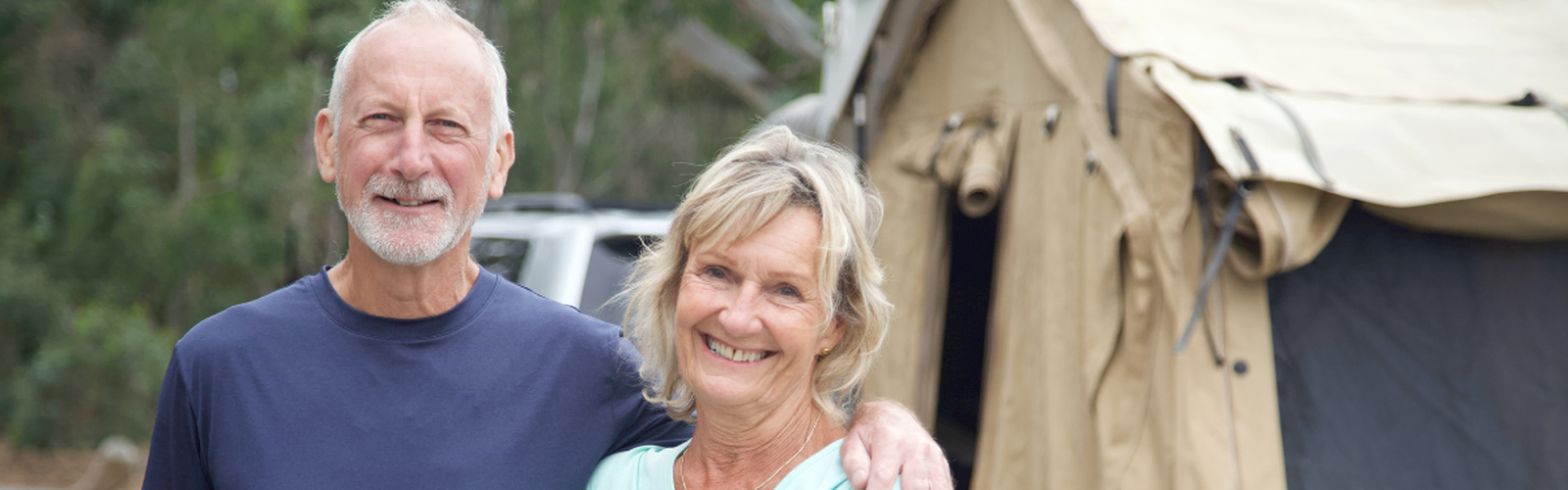
Retirees David and Liz had set off from Melbourne with a plan to drive around Australia.
They made their way north to Queensland then headed west across the Savannah Way to WA’s Kimberley region. One of their stops along the iconic Gibb River Road was Mount Elizabeth Station.
Other travellers had told them about some Aboriginal rock art in Wunnamurra Gorge on the property. To reach the spectacular gorge takes a ten kilometre journey over an extreme 4WD track, and then a two kilometre hike over rocks.
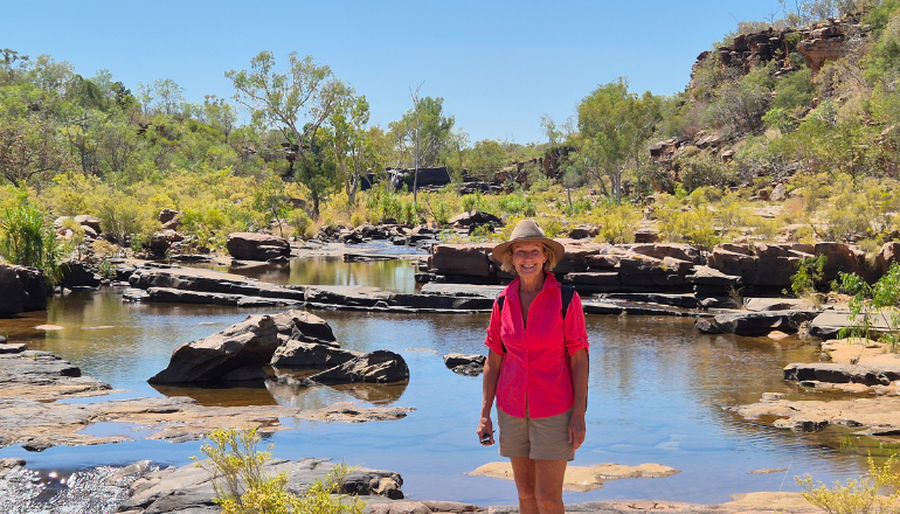
David and Liz climbed down ladders into the gorge, cooled off in a stunning swimming hole beneath a waterfall and admired the ancient rock art. They describe it as one of the most remote and unique places they’d seen and a highlight of their trip.
Still in the gorge, Liz slipped on some rocks, and they both heard a crack. It was very obvious when they looked at Liz’s ankle that it was broken.
David used snake bite bandages to hold Liz’s ankle in place and sticks to make a splint. Another traveller helped David carry Liz through waist-deep water back towards the bottom of the gorge.
Another challenge was that the couple’s communication devices were still in the car, kilometres away. Thankfully another couple had a satellite device which allowed them to text their daughter in Victoria, who then contacted Mount Elizabeth Station.
The station owner flew out in his helicopter and landed right near the edge of the gorge. He’d brought along a nurse who happened to be working at his property. In the meantime, other tourists had helped David lift Liz out of the gorge, from ledge to ledge, using one of the ladders as a stretcher.
“With the arrival of the helicopter, we were very grateful Liz was able to receive some pain relief from the RFDS medical chest that’s kept on remote properties,” said David.
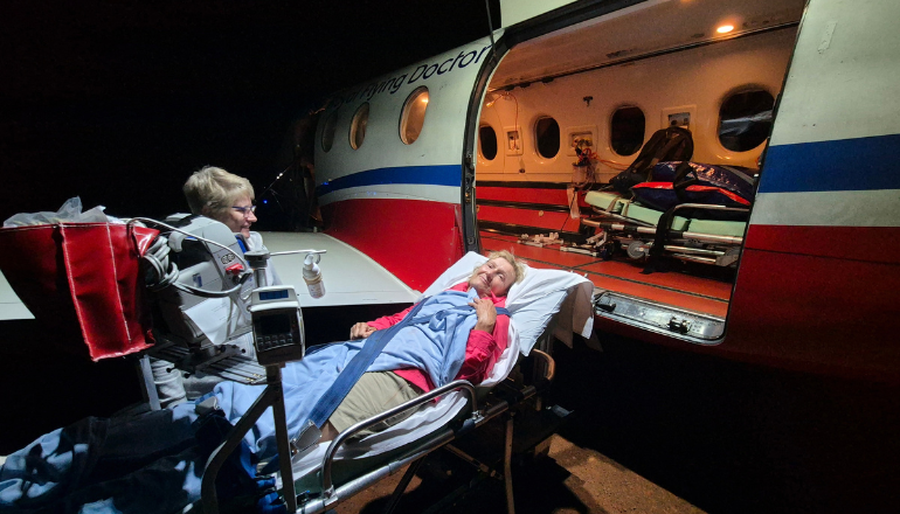
The station had also been in contact with an RFDS doctor via Telehealth who was directing Liz’s care. By this stage it was too dark for an aircraft to land at Mount Elizabeth, so after some further pain relief from the medical chest, David drove Liz about 120 kilometres to Mount Barnett Station, which has lighting at the airstrip.
The RFDS flew Liz to Broome Health Campus and then on to Perth for surgery in what David calls a seamless process.
“It was such a relief to have the support of the RFDS to organise and coordinate and then take over Liz’s care,” said David.
“All the RFDS staff were so professional and reassuring. The experience has given us a new appreciation of the challenges of remote living and travel. If it hadn’t been for the RFDS, I don’t know what we would have done.”
The couple are about to pack up their camper trailer once again and pick up their big adventure where they left off.
“I have my fingers crossed we won’t need the RFDS again, but it’s reassuring to know they’ll be there if we do,” said David.