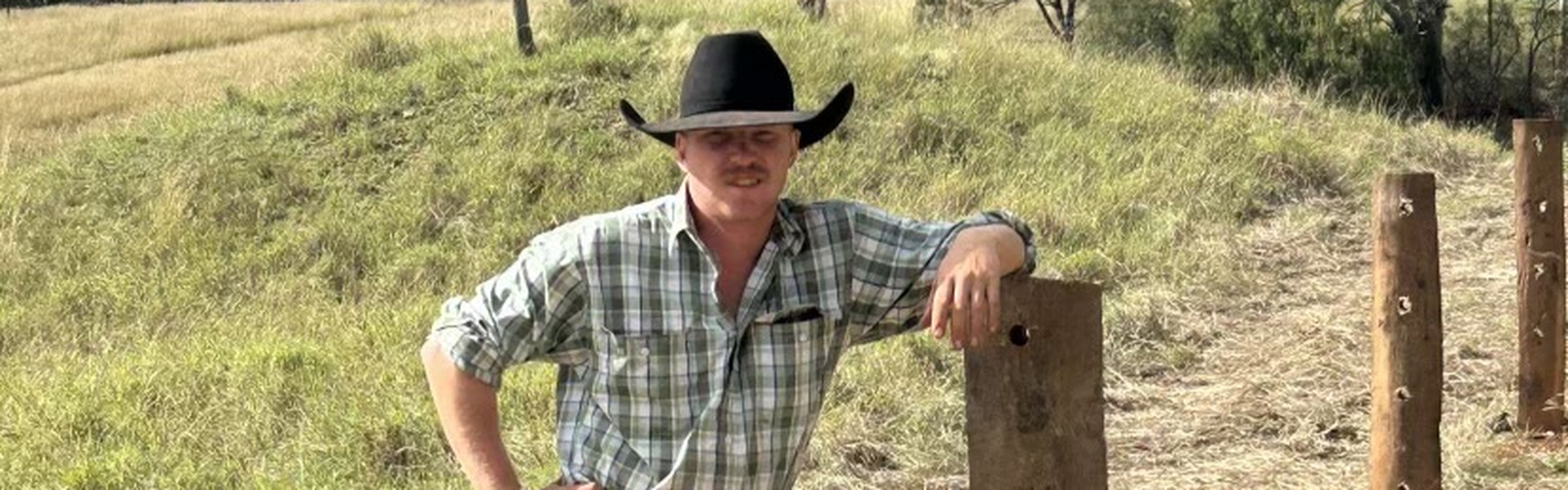
A routine workday in far western New South Wales turned into a medical emergency for contract musterer Patrick 'Paddy' Blomfields, when a kangaroo slammed into his side, severely breaking his leg and requiring the help of the Flying Doctor.
Paddy, from the small Liverpool Plains village of Caroona, was working near Ivanhoe in May this year when the freak accident occurred.
Having travelled across some of Australia's most remote regions, Paddy was familiar with the RFDS and witnessed its impact on rural and remote communities but never imagined he would one day become a patient.
The accident happened as Paddy and a mate were riding their motorbikes back to the homestead after a long day's work when out of nowhere an Eastern Grey kangaroo crashed straight into the side of his left leg.
"So fast and unexpected was the roo that I didn't even see where it came from. I knew straight away though, as soon as it hit me, I knew I'd snapped my leg," Paddy recalled.
Remarkably, Paddy managed to stay on his motorcycle long enough to slow down safely before carefully lowering himself to the ground and asking his mate to call for help.
"The first thing that came into my head was the Flying Doctor," Paddy explained.
"I said 'Get the RFDS. I've busted my leg.'"
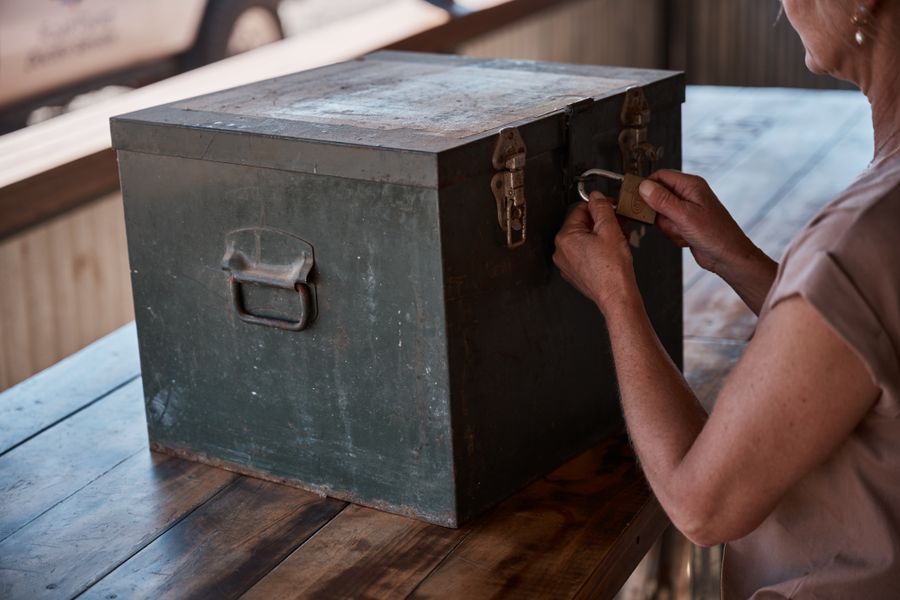
While a retrieval team was dispatched from Broken Hill, Paddy drew comfort from another important piece of the Flying Doctor network - the RFDS medical chest; a steel container with a range of medications and medical supplies which support emergency situations and primary healthcare needs in remote communities.
There are about 400 Medical Chests across the South Eastern Section network and for Paddy, it proved invaluable.
Read more about RFDS Medical Chests here.
Those helping him at the scene accessed the Medical Chest while speaking directly with an RFDS Doctor, who provided guidance over the phone.
With the RFDS retrieval team on the way, Paddy was transported by paramedics to Ivanhoe Hospital and cared for by staff who all played a vital role in supporting him while awaiting transfer
When the Flying Doctor team – Retrieval Registrar Dr Ross Gillespie, Flight Nurse Amanda Edwards and Pilot John Ivanac – arrived, they worked closely with everyone to prepare Paddy for transfer to Adelaide.
"I remember Ross took one look and said, 'That doesn't look very good, mate… we'll have to straighten that out,'" Paddy recalled.
After receiving pain relief, Dr Gillespie and Flight Nurse Edwards carefully stabilised Paddy's leg in a splint before loading him onto the aircraft for the flight to Adelaide.
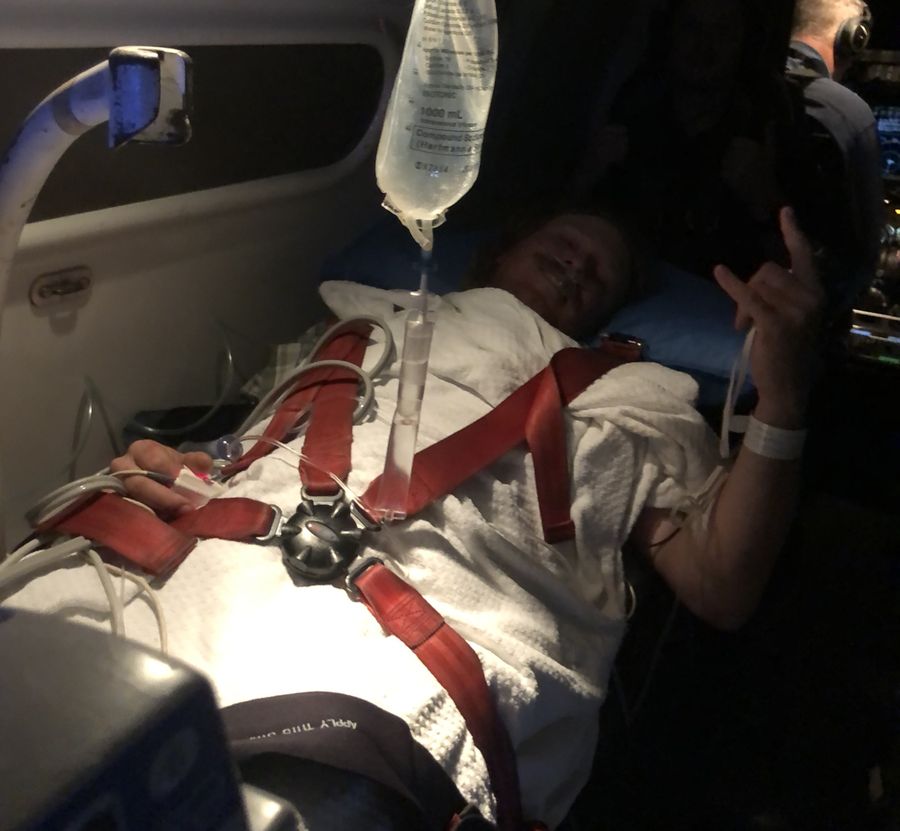
Further assessment at Adelaide Hospital revealed the severity of the injury, with both the tibia and fibula completely fractured. Surgeons repaired the damage by inserting a titanium rod through Paddy's tibia, securing it in place with screws.
"That rod will stay there for life," he said.
The injury forced Paddy to postpone several work commitments while he focuses on rehabilitation and physiotherapy.
While the road to recovery remains long, he is determined to stay positive.
"You have just got to accept it and make the most of it," Paddy said.
After several days at Adelaide Hospital, Paddy was discharged with great appreciation for all medical services who helped save him.
"It's incredible, really," Paddy said. "The RFDS, the medical chest, the ambos, everyone."
"It was pretty cool in a way. Not the situation… but actually seeing what they do, firsthand."
For Paddy, the experience has reinforced what many people living and working in remote Australia already know, when distance and circumstance combine to create a medical emergency, the Royal Flying Doctor Service is often a lifeline.
Paddy is already looking forward to returning to the outback and doing what he loves most. And when he does, he'll have his own Flying Doctor story to tell.