Medical Chest Service
The RFDS Medical Chest Service started in 1942 and has been a safety net for Queenslanders who are isolated from a pharmacy or medical service, providing access to life-saving medications and medical supplies.
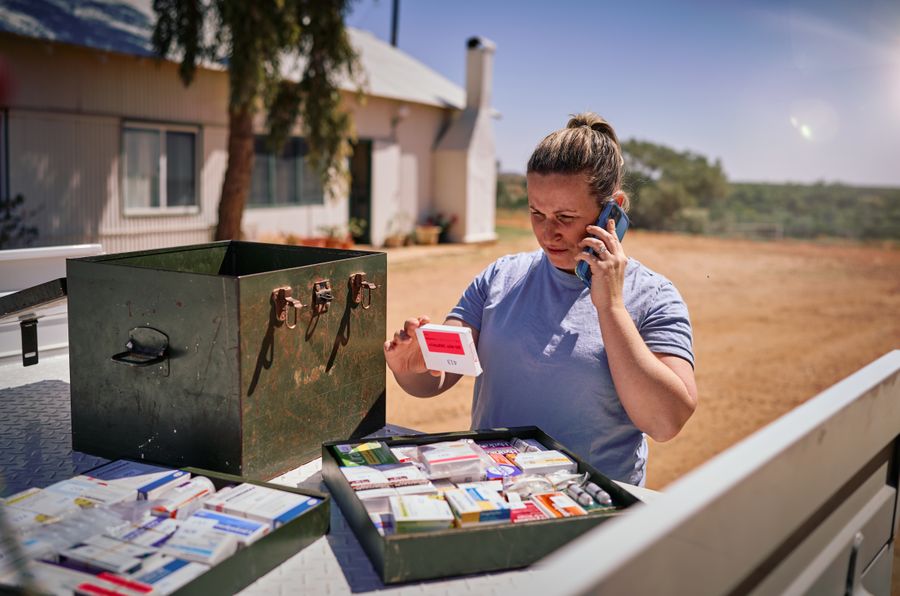
The chests include a range of pharmaceutical and non-pharmaceutical items, which enable emergency and non-emergency treatment to be given to people living and working in remote areas.
Medical chests are located across the state at various locations, including cattle stations, communities, mines, marine vessels, police stations, campsites, caravan parks and clinics.
To learn more about the RFDS Medical Chest Service, scroll down to find an extensive list of FAQs.
Medical chest eligibility
People living at remote locations who are isolated from medical services can apply to the RFDS to become custodians of a medical chest. Considerations include:
- You live more than 80 km from professional medical care (or are seasonally cut off)
- You have reliable phone access to consult with RFDS doctors
- A responsible person is available to manage the chest
Once you become a registered custodian, you must:
- Keep the chest locked when not in use
- Check contents monthly for expiry or missing items
- Use denoted prescription items only under RFDS doctor instruction
- Maintain a drug register for consultations and reorders
- Notify RFDS of any custodian changes or relocation needs
- Be able to communicate with RFDS via email and be willing to receive important medication safety information when necessary
Want to learn more? Explore the RFDS Medical Chest Custodian Guide found here.
If you believe you meet the requirements and think a RFDS Medical Chest will make a difference in your community, reach out to our RFDS Medical Chest Service team on 1300 624 378 or medicalchest@rfdsqld.com.au to check your eligibility or start your application here.
Medical chest order form
You can still complete your order using a paper or PDF form. Please select the correct order form for your chest, fill it out, and email it to medicalchest@rfdsqld.com.au.
Important: Ensure you complete the Monitored Medicine Count section at the bottom of Page 1. We’re unable to process your order if this section is left blank.
Medical Chest Portal
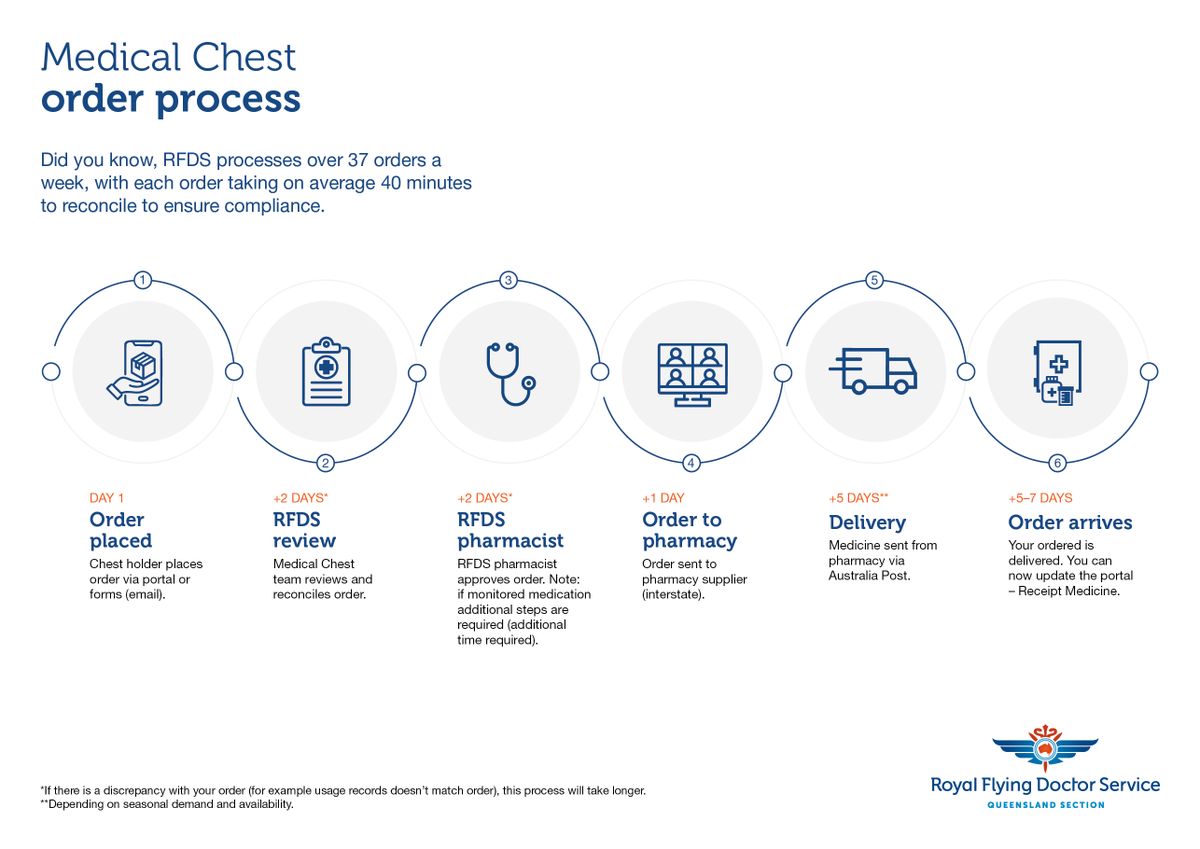
Access to the Medical Chest Portal will commence in 2026. We will contact you via email to invite you to access the portal via a link.
For existing chest holders, to learn how to access and navigate the Medical Chest Portal, please click here.
FAQs
Click on the questions below to learn more.
About the medical chest
What is in the medical chest?
What isn’t in a medical chest?
The RFDS Medical Chest doesn’t include Anti-venom or an EpiPen, due to the specific considerations regarding safe use, storage and shelf-life; however, snake bite compression bandages and adrenaline ampoules are included.
An Automatic External Defibrillator (AED) is also not part of the RFDS Medical Chest. If you are interested in owning one, you can purchase from Rescue Swag, where 100% of the profits are returned to the RFDS.
What is the difference between a mini and a standard chest?
The standard chest is a more comprehensive chest that includes paediatric formulations, additional antibiotics, additional pain relief, and first aid items. When you apply for a chest, the team can advise which chest is best suited for you.
Do I need medical training to have a medical chest?
The chest is designed to be used without any specific training; however, users are encouraged to complete a Senior First Aid certificate. It is the role of the RFDS doctor to correctly diagnose and prescribe medication from the chest. They will also advise you how to administer the medications if needed.
How to apply for a medical chest?
The first step is to check if you are eligible. See the requirements above, and if you meet those requirements, contact our team or complete this form.
Can I purchase a medical chest?
Medical chests are subsidised for eligible remote residents by the Australian Government. Chests managed by commercial entities and those who do not meet subsidization eligibility will attract Annual Service Fee. This fee contributes towards but does not completely cover the cost of the medicines provided, and the telehealth and retrieval services which support the use of the chest continue to be entirely free.
What should I do if I’ve found a chest on my property?
Please phone the RFDS Medical Chest Service team on 1300 624 378 or email medicalchest@rfdsqld.com.au, and our friendly staff will guide you through the next steps. In the meantime, ensure the chest is out of reach of children and pets. Do not remove any items from the chest.
Managing your medical chest
How often should I check my medical chest?
We strongly recommend reviewing the contents of your chest each month to ensure you can monitor expiration dates and stock levels to be best prepared. Otherwise, it is required that a stocktake be conducted every four months, and an order be placed for resupply as needed. We also recommend placing an order six to eight weeks before key events, such as mustering, school holidays or in advance of the wet season to ensure your kit is equipped to support you.
Why do I have to do a monthly Morphine Audit?
It is a legal requirement that chest holders conduct a monthly stocktake of the morphine in the medical chest and note it in the book provided or in the register on the portal. The current balance of morphine in the chest should also be included on the order form, regardless of whether it’s being ordered, if submitted in paper format.
I’m leaving my property. What do I do with my chest?
When you leave your property, you will need to either transfer your medical chest to a new custodian or return it to the RFDS. The medical chest and items within it remain your responsibility until one of these processes has been completed, even if you have physically left the location.
Please notify the RFDS Medical Chest Service team on 1300 624 378 or email medicalchest@rfdsqld.com.au as soon as you know you are leaving, and we will guide you through the next steps.
Why can’t medicines reorder automatically once they have been used or expired?
It is the responsibility of chest custodians to manage and maintain the chest in order to meet governance standards. This requires the usage of items to be recorded locally as well as in records kept by the RFDS. Medications cannot be sent without a valid order. Whilst we would like to be able to offer expiry date tracking, this is not currently possible.
What's the difference between an order and an audit?
An order is when you review your chest contents are complete an order form to replace any items that have been prescribed, used, damaged, or may be missing.
A chest audit requires you to review the contents and supporting documentation, such as the Medication Usage Book and order form. Additionally, you also review the medical chest, its key, location, and who has access. This ensures the chest’s condition and use meet the standards of the RFDS and Queensland Health.
What happens if drugs are lost or stolen?
It is expected that chest custodians will take care to ensure the security of the chest. If any medication is lost, missing, or if your order delivery is overdue, contact the medical chest team immediately.
In the event of theft, the police must be notified immediately and a report number obtained. The RFDS Medical Chest Service team must then be notified in writing, quoting the police report number.
Accessing chest contents
Do I always need a prescription to use items from the chest?
There are items in the chest that do not require you to speak with an RFDS doctor, like paracetamol, electrolytes, and wound care gel.
For items that need a prescription, identified in the contents list in red text or with a ‘D’ beside the name, you must call the RFDS doctor for an assessment and prescription, even if you can usually buy them over the counter. This process ensures that doctors can check for any underlying issues that might be hidden behind seemingly simple symptoms. All medications can be harmful if not used correctly, so it is important to have an assessment done.
Is an RFDS Doctor the only doctor who can prescribe items from the chest?
Yes, you must contact the RFDS for approval to use pharmaceutical items from the medical chest. Our doctors are familiar with the content of your chest and are available 24 hours a day via this number: 1300 69 7337 (1300 MY RFDS).
Can I call 000, my local GP, or a doctor who is a friend to prescribe items from the chest?
No. It is a legal requirement that you must contact the RFDS for approval to use those items in the medical chest that require doctor's consultation. Our doctors are familiar with the contents of your chest and are available 24 hours a day via this number: 1300 69 7337 (1300 MY RFDS).
Is the chest just for emergencies?
No, the chest is not limited to emergency use. While some items are specifically designed for urgent situations and can help relieve pain or treatment while waiting for medical retrieval, most contents are intended to address acute but manageable health conditions. This helps avoid unnecessary travel for treatment.
However, the medical chest should not be used for ongoing chronic conditions, as those should always be managed by your regular doctor or specialists.
Safe use of medicines
What happens if my medication expires?
It’s important to note that expired medication should not be used and should be disposed of or returned appropriately. Learn more about the importance of not using expired medication here.
How do I dispose of expired/unused medications?
Expired, non-monitored medications should be returned to your nearest pharmacy or disposed of by onsite incineration. They must not be thrown in the trash, buried, or flushed. Learn more here.
Expired monitored medications from the medical chest must be returned to the RFDS Medical Chest Service team and can be identified by bright pink stickers that say, “Do Not Destroy.” These are reconciled against usage and supply.
What to do if experiencing side effects?
If you experience serious side effects like difficulty breathing or chest pain, call 000 and consult a doctor immediately. Medications for allergic reactions and anaphylaxis are available in the medical chest through an RFDS doctor.
Once you recover or if side effects are mild, report your reaction to the Therapeutic Goods Administration (TGA) here.
What to do if you’ve accidentally taken too many medications?
Call 13 11 26 or visit Queensland Poisons Information Centre. If you are advised to seek emergency care, please call 000. Please note that there are no treatments for poisoning in the medical chest.
How to mix antibiotic suspensions
Many children's antibiotics come as a powder to be reconstituted. Use cooled, boiled water and a measure to add the correct amount as specified on the label. Shake or tap the bottle to break up settled powder before adding water. For accurate measurement, use a medicine measure (item 201) or syringe (item 419 or 240) from the medical chest. If not available, use clean utensils while considering food allergies to avoid contamination. Conversion examples:
- 80mL = 1/3 measuring cup
- 63mL = 1/4 measuring cup + 3mL from a syringe
- 60mL = 1/4 measuring cup
- 9mL = syringe from medical chest
After adding water, replace the lid and shake well. Store in the fridge and discard any unused portion after 7 days.
How to manage medication while pregnant
If you have any concerns around the use of medications in pregnancy or when breastfeeding, we suggest these general resources. Always discuss your personal circumstances or concerns with your health care team.
The RFDS Medical Chest Service is written into Queensland State legislation, and RFDS (Queensland Section) carries a substance authority to support non-healthcare professionals managing scheduled medications. This is supported by our Substance Management Plan, which is available for all chest holders via the request form below.