For someone in a remote community who needs urgent care, a newer aircraft means a faster and safer journey to help. The Royal Flying Doctor Service is rolling out a new fleet of Pilatus PC-12 PRO aircraft, bringing the latest aeromedical technology closer to the patients, crews and communities who depend on the Flying Doctor every day.
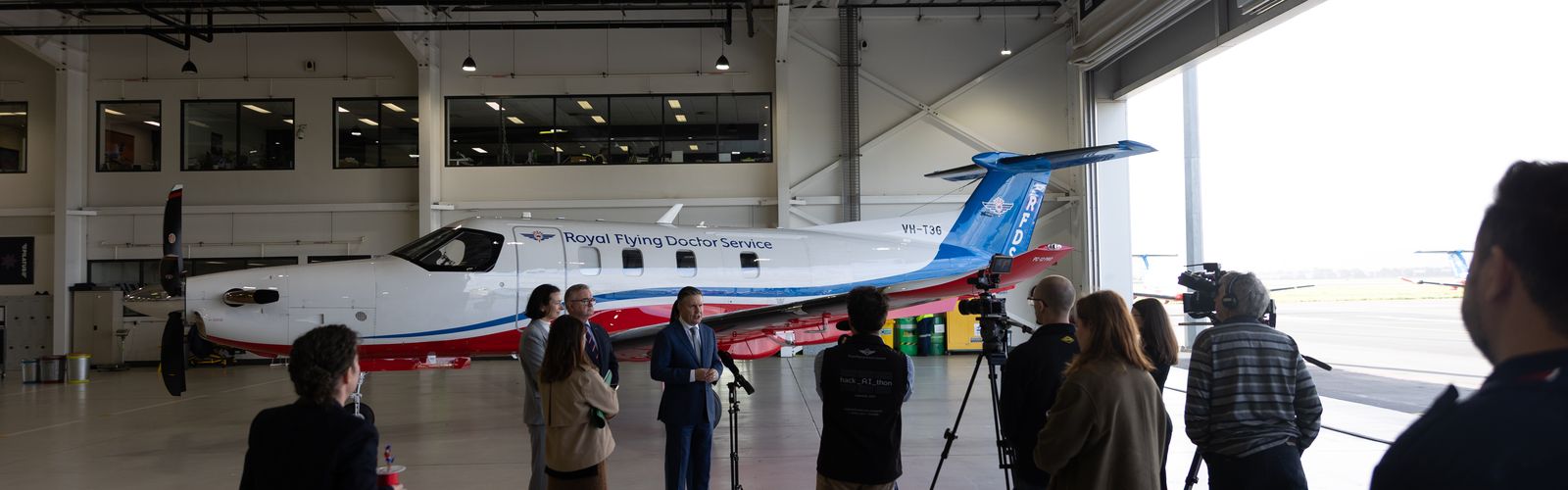
One of the new aircraft was officially launched at the RFDS Adelaide base, where RFDS SA/NT Chair Peter de Cure AM welcomed Federal Minister for Health and Ageing, the Hon Mark Butler MP, to see it up close.
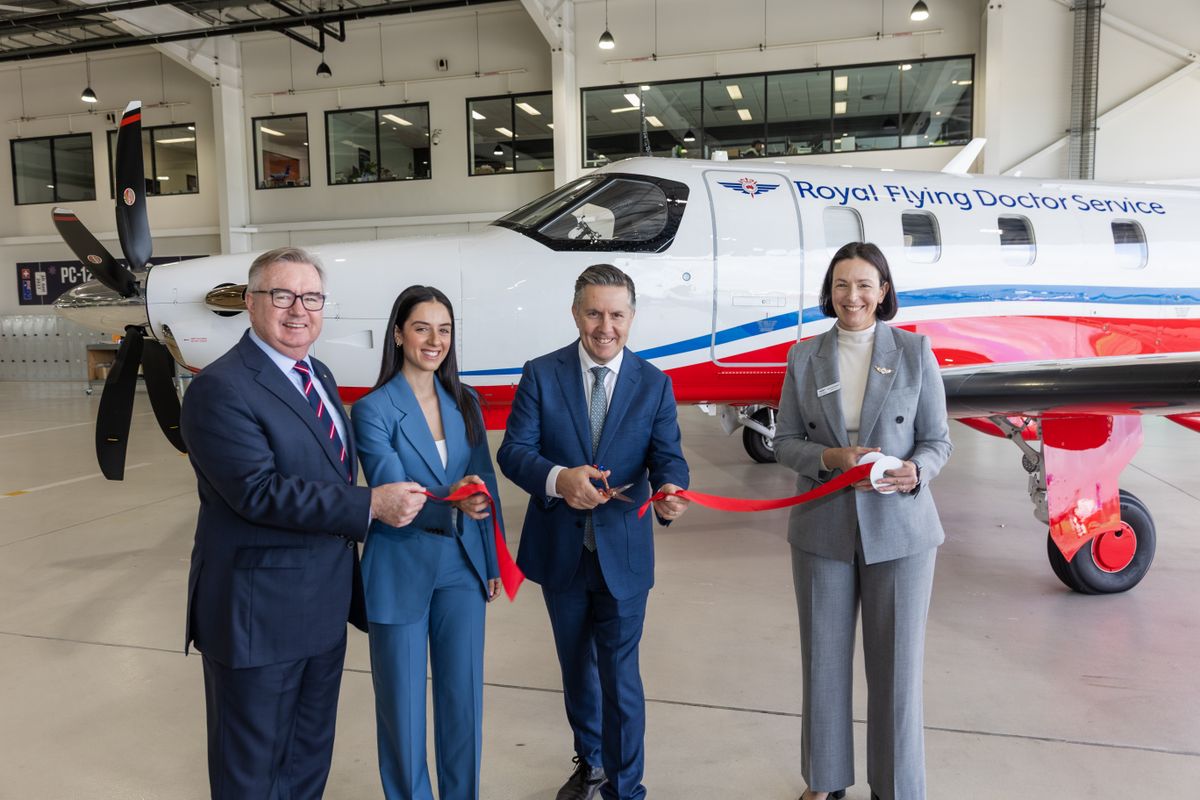
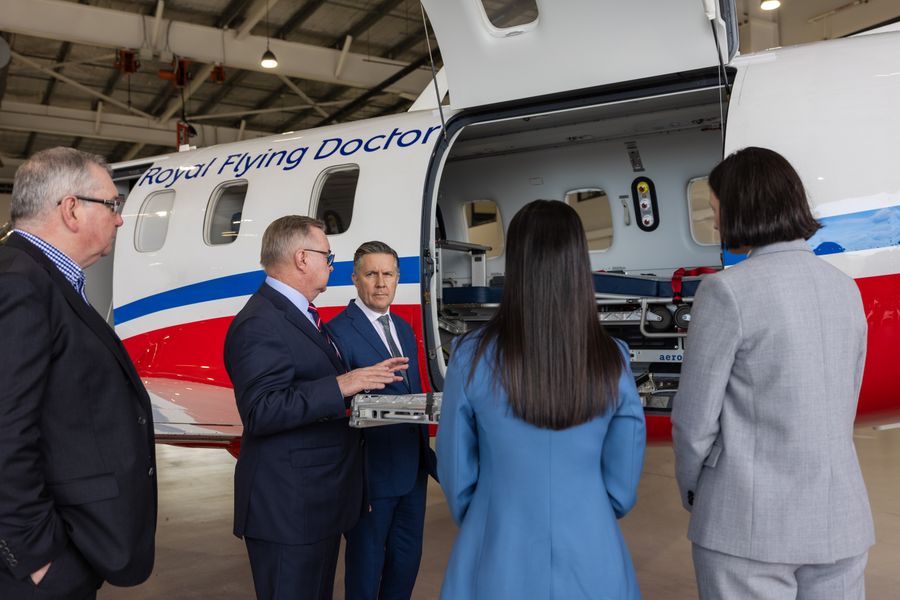
The Pilatus PC-12 PRO is one of 12 new aircraft the RFDS will receive over two years, taking the total fleet beyond 100 aircraft. Essentially a flying intensive care unit, it is the first version in the world to be fitted out for aeromedical work.
The rollout reflects the RFDS’s ten year strategic partnership with the Australian Government, alongside the enduring generosity of the donors, corporate partners and volunteer fundraisers who have backed the Flying Doctor for more than nine decades.
The Commonwealth has funded the RFDS since the 1930s and has committed more than $1 billion over ten years to support its services, which reach around 345,000 Australians in rural and remote areas each year.
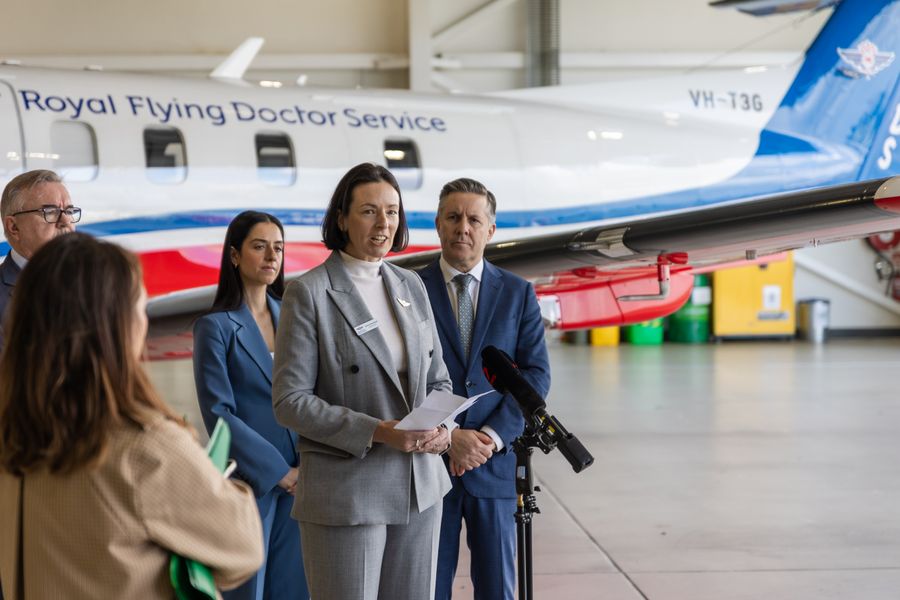
Federation CEO Emma Buchanan welcomed the Minister to the Adelaide base.
“The Pilatus PC-12 PRO is one of 12 new aircraft we are receiving over two years and marks one of the largest fleet upgrades in our history,” Ms Buchanan said. “The aircraft’s advanced technology, improved safety features and enhanced aeromedical capability will directly benefit our patients, crews, health partners and the communities who rely on us every day. It is essentially a flying intensive care unit and is the first aeromedical-fit version in the world.”
Ms Buchanan thanked the Australian Government for its contribution to the uplift in aeromedical capability.
“We are incredibly pleased, proud and privileged to have a ten-year strategic partnership with the Australian Government,” she said. “The strategic partnership with Government is critical to our ability to be the lifeline for people who live, work and travel in rural and remote Australia.”
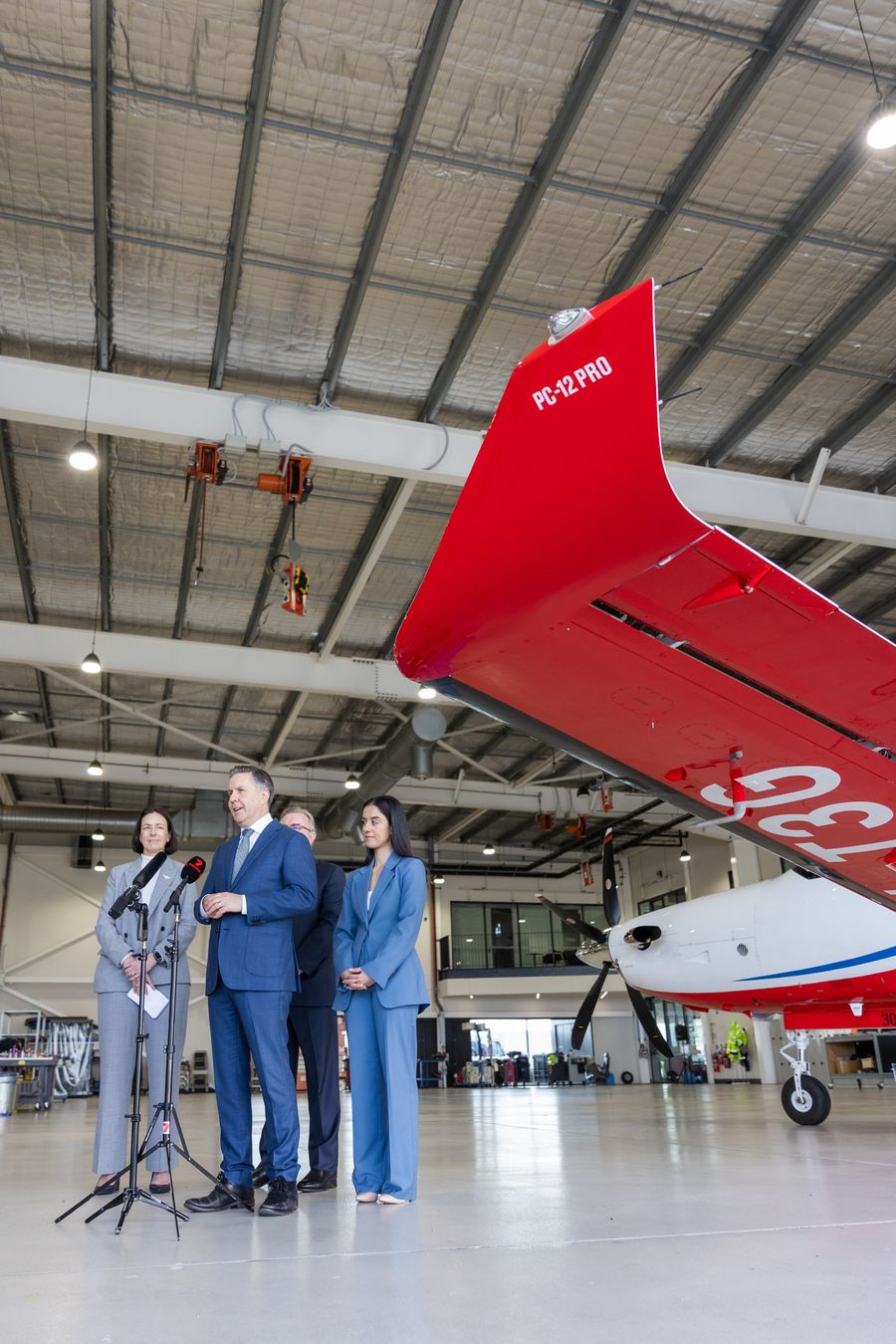
The next generation PC-12 PRO is a real step forward in safety and capability. An autoland system can control and land the aircraft autonomously in an emergency, smart glide assists pilots if engine power is lost, and an advanced cockpit with synthetic vision sharpens awareness at night, in poor weather and on remote airstrips.
A lighter airframe carries more patients and fuel, runs on sustainable aviation fuel, and still lands on short, rough strips of grass, gravel and dirt, needing just 758 metres of runway.
In short, the new aircraft offers:
• Safety Autoland to land the aircraft autonomously in an emergency
• Smart Glide and improved stall protection for engine power loss
• Advanced cockpit with synthetic vision for night and poor weather
• Greater patient capacity and range from a lighter airframe
• Lower emissions and sustainable aviation fuel compatibility
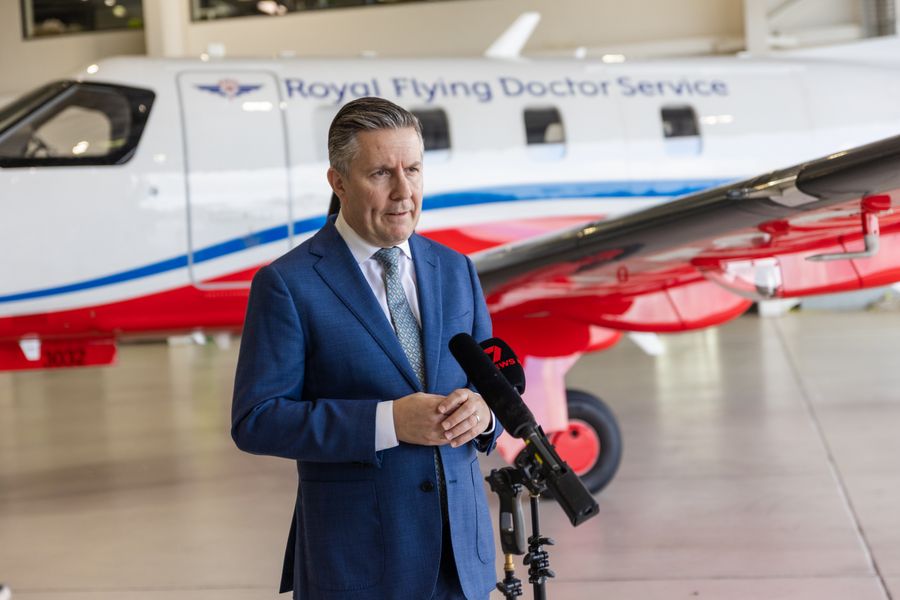
Minister Butler said the RFDS had long been a lifeline for remote Australia.
“Over nine decades, the RFDS has provided a lifeline for people who live, work and travel in rural, remote and very remote Australia,” Minister Butler said. “Our government is committed to ensuring no one is left behind in having access to health and medical care, including lifesaving care and transport to hospital for people in isolated communities during medical emergencies, where there are no alternative services.”
These advances bring the latest aviation and medical technology to the crews, pilots and patients who rely on the Flying Doctor.
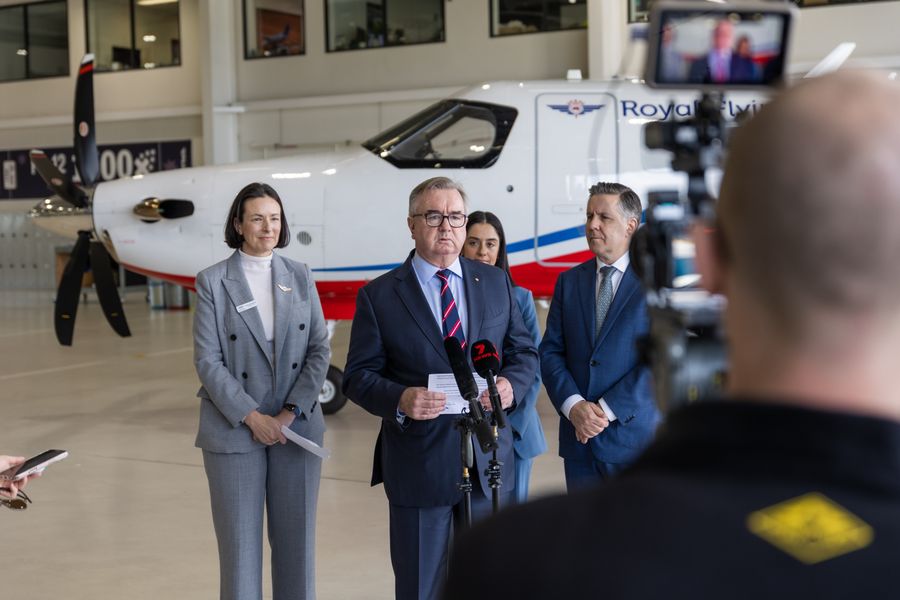
RFDS SA/NT Chair Peter de Cure AM said the new aircraft would make a real difference for the communities the service reaches.
“They’re safer, they’re faster, and they’re more nimble,” Mr de Cure said. The new aircraft replace others that are 15 to 20 years old, bringing the latest aviation and medical technology to the crews, pilots and patients who need it most.
For almost 100 years, Australians have trusted and supported the RFDS to deliver care across rural and remote Australia. This partnership, and the support behind it, helps the Flying Doctor continue to improve the health and wellbeing of the communities who rely on it.