In February 2026, five Retrieval Doctors start their orientation with one of the world’s famous aeromedical providers, the Royal Flying Doctor Service South Eastern Section (RFDSSE). Accompanying them are three Flight Nurses, two of whom joined the service in the last few months.
Retrieval Doctors and Flight Nurses work in concert in close quarters up to 35,000 ft in the air and in some of the remotest parts of the State. During a four-week induction, they will learn how to calmly and confidently tackle some of the most extreme medical emergencies they could face in the outback through face-to-face training, realistic simulations in the aircraft trainer and participating in the RFDSSE’s iconic ‘Farm Day’.
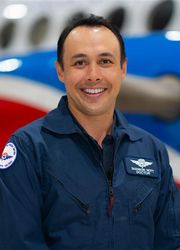
Our teams might be the only medical help for hundreds of kilometres, so they need to be able to deliver intensive care level treatment immediately in an environment with limited resources. High-quality training is fundamental to preparing them for the realities of delivering care across regional and remote NSW.
Chief Medical Officer, Dr Shannon Nott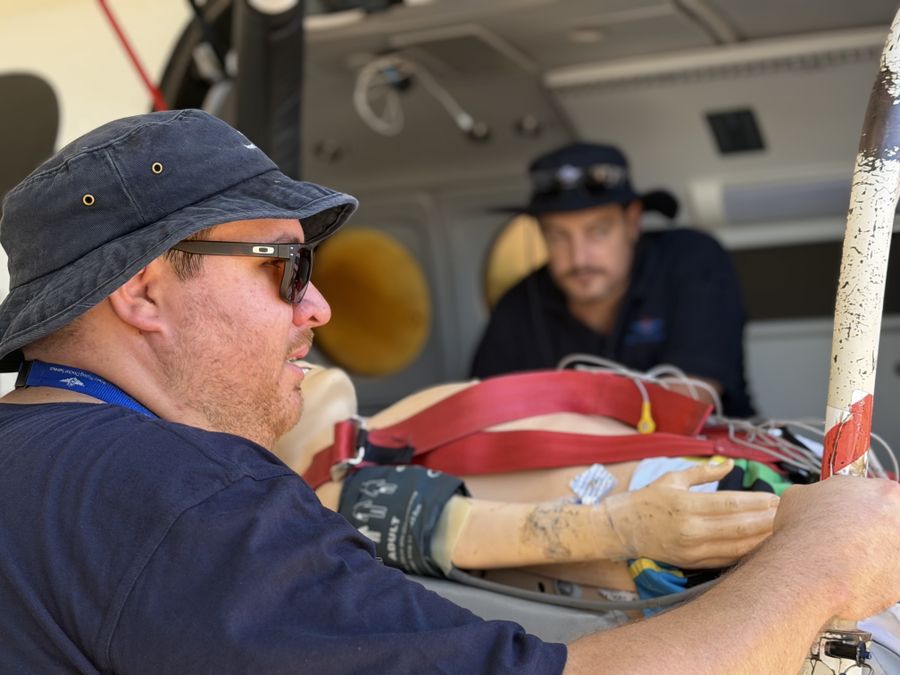
The training is delivered with Flight Nurses and Retrieval Doctors working side by side, just as they would in the aircraft, so their learning environment reflects what they’ll face on the job. It’s this level of preparation that ensures our teams are ready for whatever they encounter in the field.
The new Retrieval Doctors hail from the UK, Germany and Australia, including born-and-bred Dubbo local, Dr Danielle Smith.
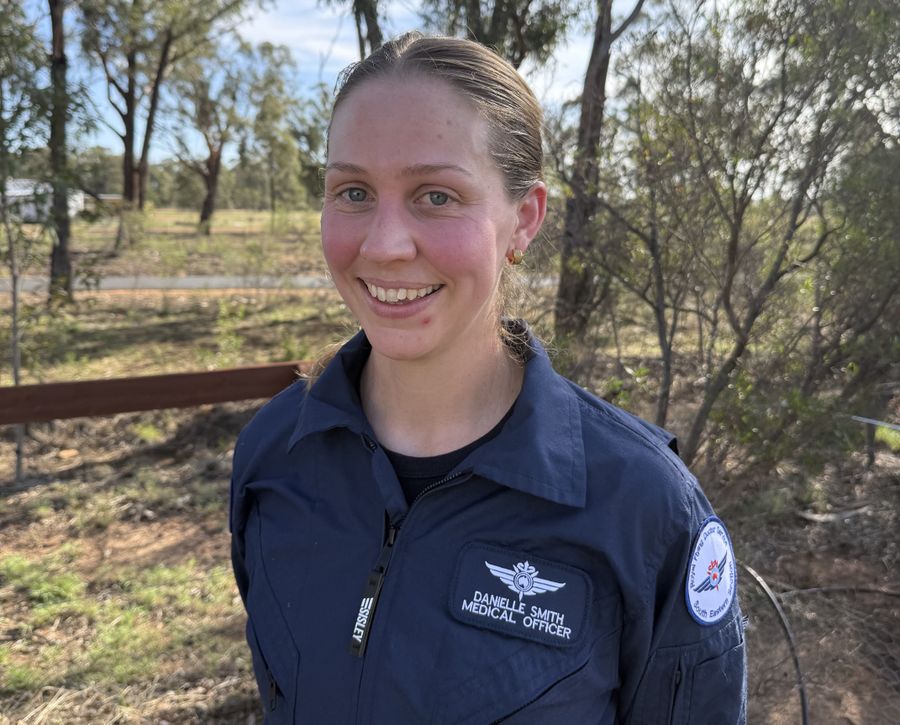
For Dr Danielle, starting her RFDS career in her hometown is particularly special.
“Staying in Dubbo is so important to my husband and me as a family. We now have two kids, the eldest of whom has started school locally,” Dr Danielle said, “Having lived in Sydney for part of our training, it was a huge relief to come back to such a friendly and supportive community for the kids to grow up in. We love the community, the easy lifestyle and the opportunities that have opened up to us since being back.”
Dr Danielle had her first taste of becoming a Flying Doctor when she spent a year in Broken Hill, home to NSW’s largest RFDS Base, as a medical student. Embarking on this orientation feels like a full-circle moment. “I’m now in my final stages of emergency medicine training, so the RFDS seemed like the perfect opportunity to experience more rural and remote medicine whilst putting my emergency training to the test,” Dr Danielle concluded.
What happens during orientation
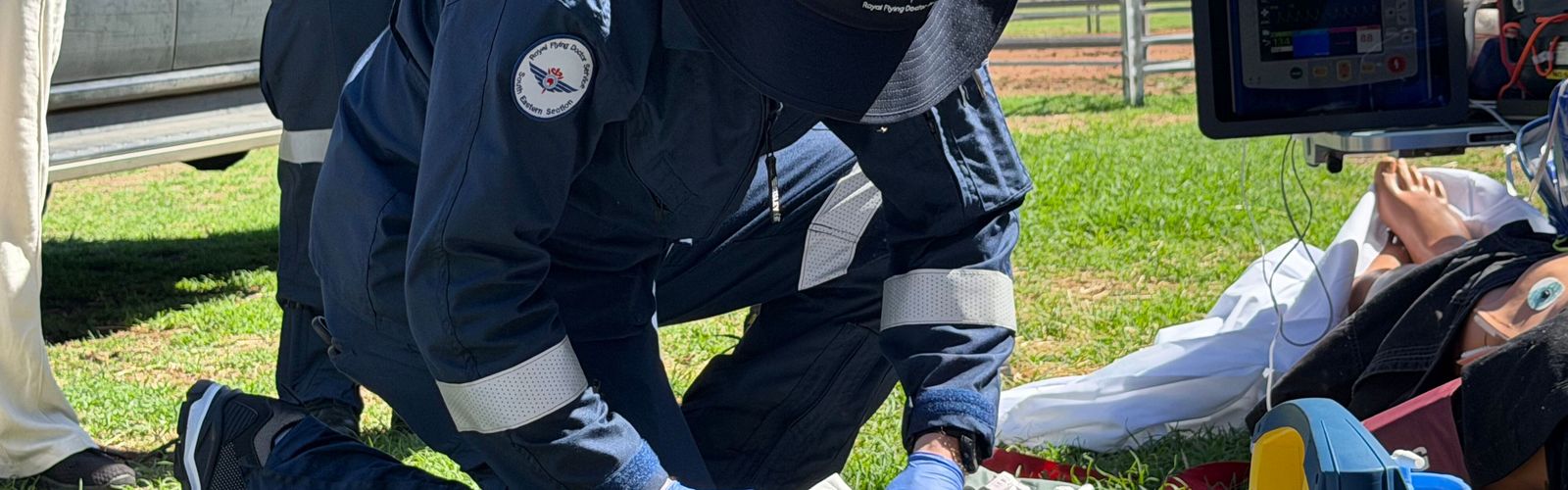
Training includes recreating high acuity scenarios during Farm Day, taking part in a primary rescue simulation with Dubbo’s VRA Rescue NSW volunteers, gaining hands-on experience at the Sydney helicopter base, and completing a dedicated day of ultrasound and telehealth training.
There are even ‘patients’, thanks to Sydney University’s School of Rural Health and Charles Sturt University’s medical students standing in.
This year, the Farm Day will be hosted on a working property, about 90 kms outside of Dubbo. Just a few of the scenarios include:
- An explosion with six ‘patients’ needing urgent treatment
- Facial injuries with bleeding in the airway in a patient thrown off a horse
- Critical injury caused by heavy farm machinery
- Heart attacks
- Drowning on a remote property
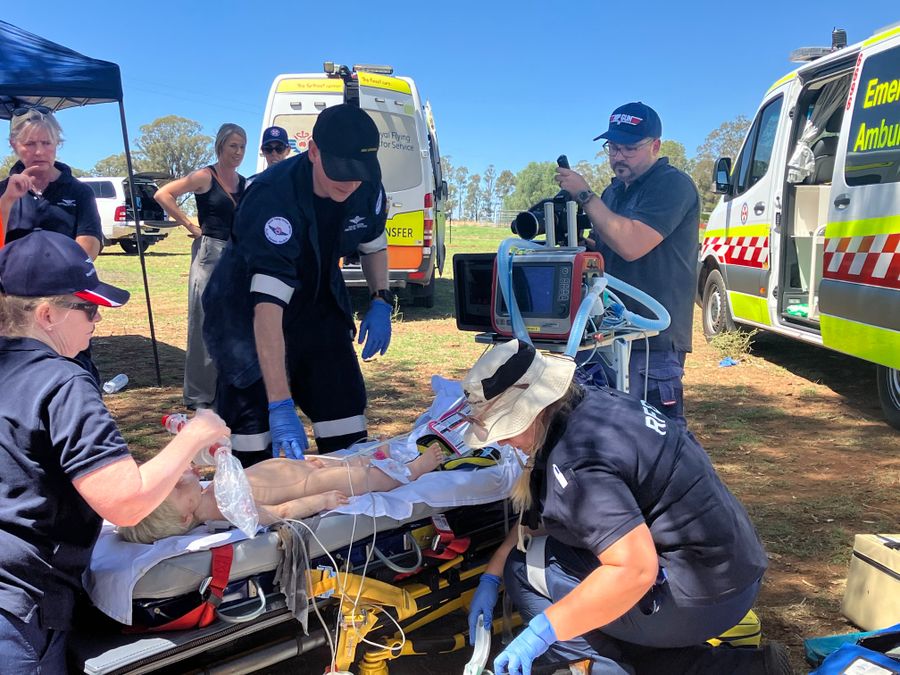
Every second counts in these kinds of scenarios. We even bring in a real horse and tractor, so the team can practice working with the community to move obstacles that may make a scene unsafe, mirroring the kinds of incidents they’ll face. Back at the base, we use a repurposed RFDS aircraft fuselage to practice moving patients between a vehicle and the aircraft.
The more realistic the training, the better prepared they are when a real person’s life depends on it.
When the unimaginable becomes reality, that impact can quickly ripple through the community
Working in remote and vulnerable communities, emergencies can have far-reaching impacts beyond the patient and their immediate families. The Royal Flying Doctor Service is in a unique position to not only provide emergency care, but also mental health and wellbeing support post-incident.
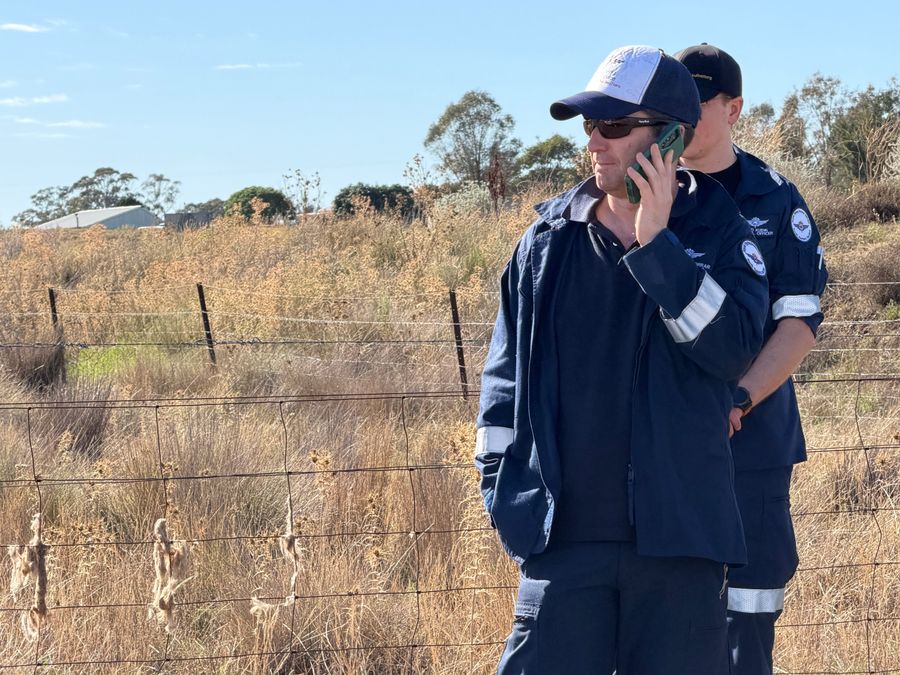
The Mental Health team works with the Retrieval teams to understand their role in connecting vulnerable people to the RFDSSE’s extensive mental health services.
All Retrieval teams carry what we call ‘Post-Critical Incident Cards’ with important information on how to seek support. We also have processes in place to identify emergencies and incidents that may require follow-up from one of our 30 mental health professionals, where we can provide on-the-ground or remote support to anyone affected.
With two-thirds of our staff based in the communities we serve, the RFDS is deeply embedded in Western and Far Western NSW. This additional training enhances our capacity to support these communities and reaffirms our commitment to delivering end‑to‑end care.
In addition to working at the RFDS, our Retrieval doctors also work at Dubbo and Broken Hill Hospitals, a shared work arrangement that has been in place for many years and ensures the best available care is available across Western and Far Western NSW.