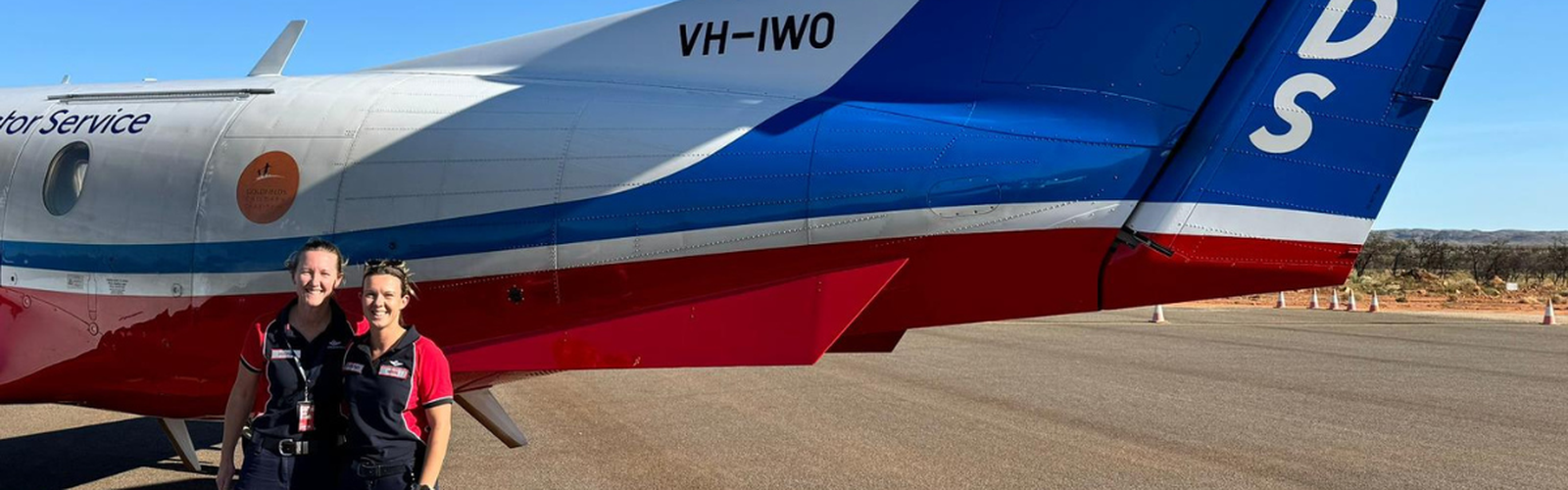
Dr Pip Baker grew up on a dairy farm in northern Victoria and graduated in Medicine from the University of Adelaide. After completing her internship and residencies in Adelaide’s tertiary hospitals, she headed bush to undertake her General Practice training.
Pip spent four years on South Australia’s Kangaroo Island working as a Rural Generalist before taking a locum position in Balgo, in the remote East Kimberley, on a fly-in, fly-out basis. In 2024 Pip and her partner Courtney both joined the RFDS, Pip in Primary Health Care and Courtney in Retrieval Nursing. After 18 months working at the RFDS Port Hedland base the couple recently relocated to Broome with their campdog Rolly.
What attracted you to being a GP in remote and regional WA?
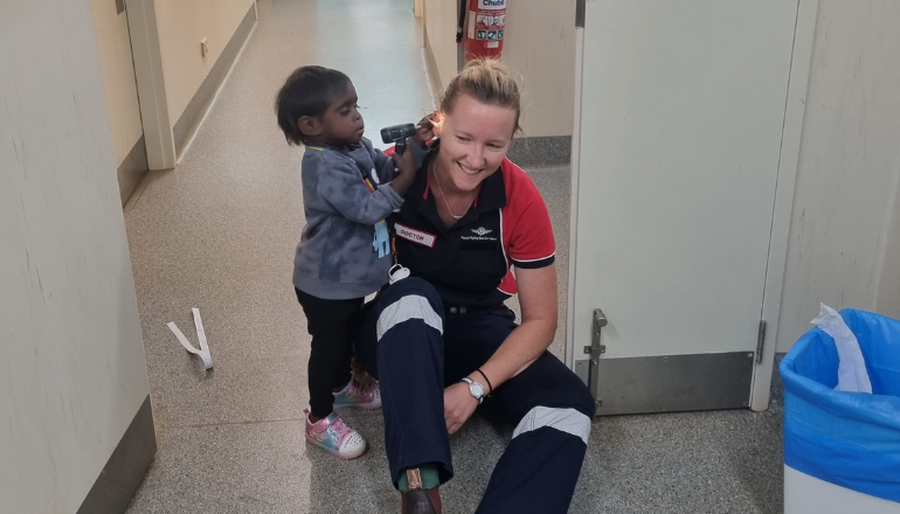
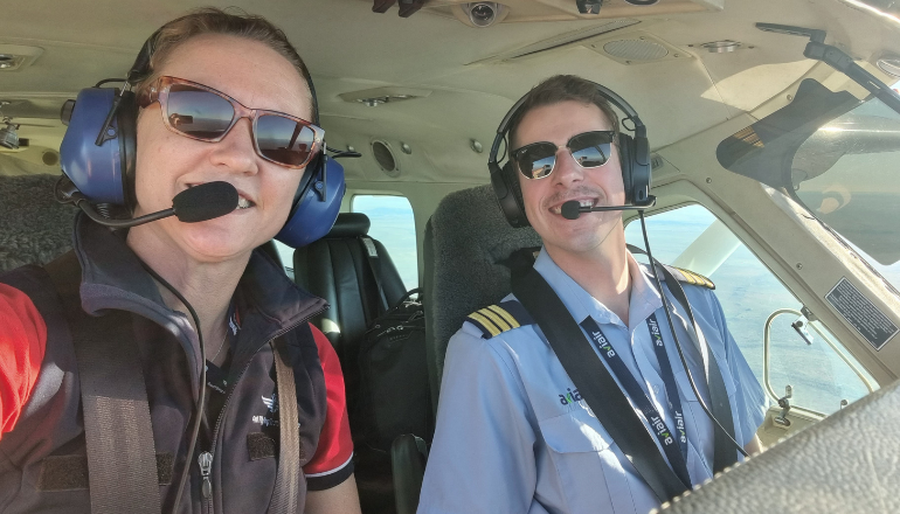
I think I have the best job in the world. I love the people, I love the style of medicine, I love the places. I love flying and have started to learn to fly myself.
I don’t think I could ever go back to suburban general practice. My patients have lived courageous lives and have so many stories to share. I hold different opinions to many of them, but we can have a good debate and put things aside to ease their ailments.
What are the locations you run primary health care clinics in?
In the Pilbara I visit Nullagine, Yandeyarra and Marble Bar. In the Kimberley the clinics are in Yakanarra, Djugerari, Koorabye, Kadjina and four stations.
How does the ‘tyranny of distance’ affect the health outcomes of the patients you see regularly?
Too many times I see patients forced to accept ‘any care’ rather than the care that is appropriate for them. There are limited choices to see a doctor of a different gender, culture or age. There are often limited or no choices for allied health support and telehealth services can’t always fathom how hard it is to change your diet and exercise habits in January in Marble Bar.
In the worst of circumstances, and for a variety of reasons, people avoid accessing services at all.
The patients we visit in some of the most isolated parts of the state have a higher disease burden, are later to receive a diagnosis and suffer the consequences in long-term outcomes. The RFDS can’t be everything to everyone, but we can push hard to provide services that people would choose, even if they had more choice.
If your patients didn’t have the RFDS run clinics in their community, how would they access GP services?
Most patients in the Pilbara would have a two and half hour drive to Port Hedland or Newman and the services there are already working overtime with supply not meeting the demand of residents.
A patient from the Kimberley talked to me about accessing healthcare over the wet season, when the RFDS is unable to visit their station. She said the blood test her husband needed is unlikely to happen because by then their road will almost certainly be closed. It would cost about $5,000 for a charter plane to collect him and then again to fly him home. The mail plane only comes once week so if he went one way on that and did a charter flight back the cost might come down to about $3,000, factoring in accommodation too.
Most communities we visit in the Fitzroy Valley have a two hour drive to Fitzroy Crossing Hospital for the nearest available health care. They can be cut off completely during the wet season and we often end up bring other supplies for the community in our charter plane.
Are there particular health issues you see a lot of at the clinics you run?
I spend a large amount of time managing Chronic Kidney Disease, Diabetes and Ischaemic Heart Disease, as well as managing skin conditions such as tinea, scabies and impetigo.
What is the best part of your job?
That’s easy - the people. The RFDS people are great, but the patients are truly inspirational.
Apart from work, how else have you and Courtney become part of the local community in Broome?
The crew at the RFDS base have been incredibly welcoming, helping to make the Kimberley our home, from sharing produce from their garden to helping us beach launch our boat.