
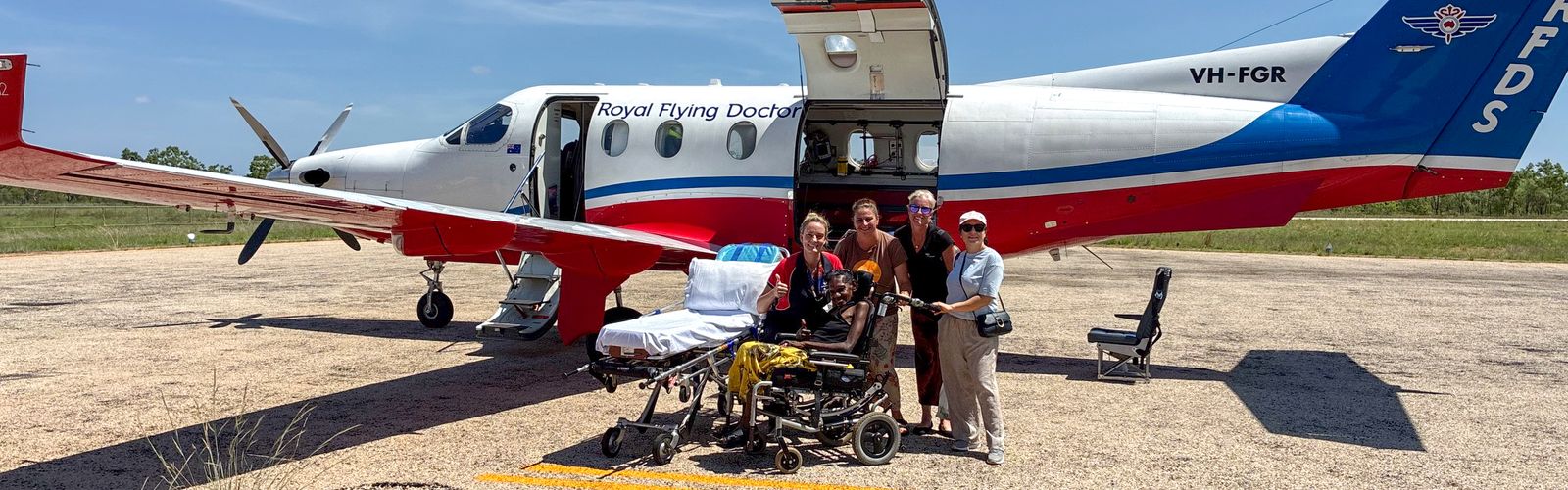
For many Territorians with severe, progressive illnesses, the chance to go home can mean more than any treatment.
For Bowie, who lives with Machado-Joseph Disease (MJD) and is dependent on full-time care, her recent trip home was a moment she had been dreaming of for more than a year.
With support from the MJD Foundation, the RFDS and TK Community Services, Bowie returned to Ngukurr, more than 600km from Darwin, to be with family for Christmas.
Despite the physical challenges of MJD, Bowie’s mind remains sharp and full of humour – shown when she secretly packed a miniature Christmas tree on the plane to surprise her family.
Back on Country, she was welcomed with joy, hugs and early festive cheer.
Bowie is the first of several patients who will be supported through the RFDS and MJD Foundation collaboration in coming months, helping Territorians with complex conditions reconnect with family and Country.
RFDS SA/NT Chair Peter de Cure AM said the Flying Doctor is committed to improving care for rural and remote patients, whether it be an emergency situation or an invaluable repatriation flight.
“For some patients, going home is just as important as going to hospital,” he said.
“A return to community, culture and family can profoundly impact wellbeing. We’re proud to work with the MJD Foundation to make these moments possible.”
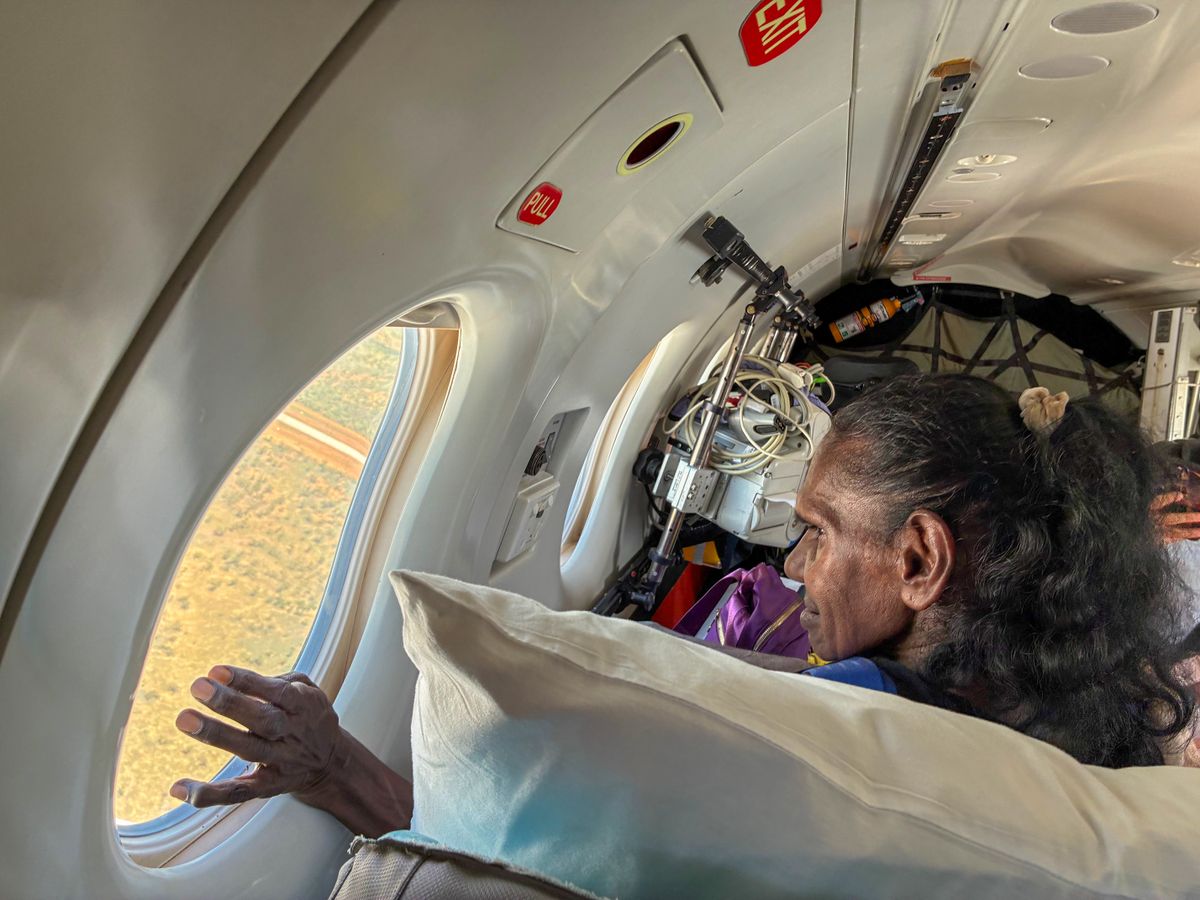
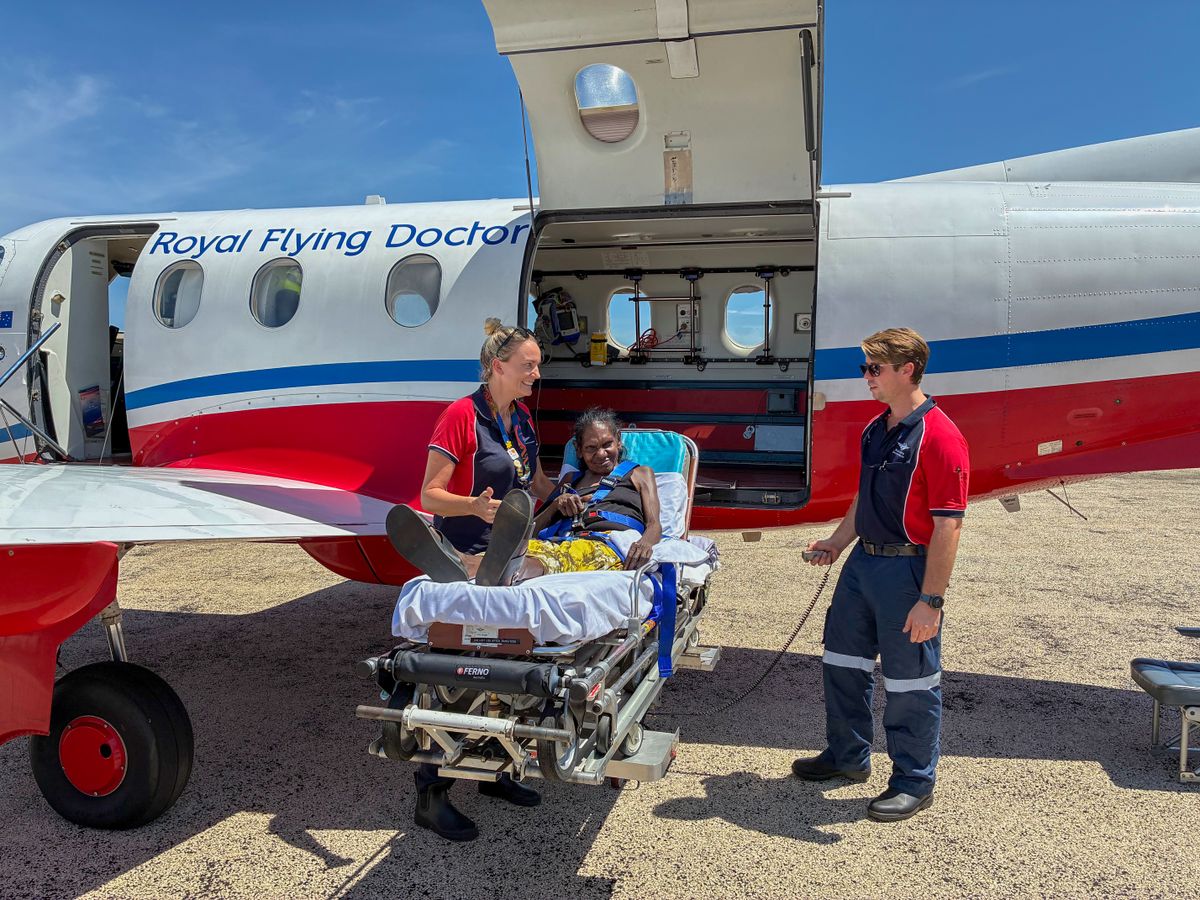
Through the RFDS Low Acuity Medical Retrieval (LAMR) Service, patients like Bowie can travel safely between Darwin hospital care and their remote communities.
The service supports people unable to travel long distances by road due to medical, mobility or safety concerns, and in the past year has helped dozens of Territorians return to communities otherwise difficult or unsafe to reach.
For people living with MJD – a progressive, inherited neurodegenerative condition affecting mobility, speech, balance, strength and independence – these trips are vital.
The disease is tragically common in some Top End communities, with more than 790 Aboriginal and Torres Strait Islander peoples currently considered at risk.
“As the disease progresses, people often become dependent on others and many need to live away from home to access support,” MJD Foundation CEO Jacquie Hatt said.
“This is where the MJD Foundation plays a crucial role, helping people stay connected.”
The organisation provides mobility equipment, therapy programs, cultural support and ‘kin connection trips’ that allow people to return home several times a year – something that becomes difficult without clinical travel support.
Ms Hatt said the RFDS partnership is making these journeys safer and more accessible.
“Connection to family, Country and culture is central to wellbeing for people with MJD. Even a short visit lifts spirits, strengthens identity and eases the emotional weight of the disease.
The RFDS said several more home visits are planned.
“Bowie’s trip is just the beginning,” Mr de Cure said.
“Everyone deserves the chance to be with family – especially at Christmas.”

Learn more about the Flying Doctor.